
Consultant bill rates…have they reached their peak?
 Having monitored bill rates for consultants over the last several years, I’ve seen a new trend…flattening out. Does this mean we’ve seen the peak in the industry and the needs for consulting services is slowing down? Perhaps the market is so saturated with firms and resources. Or maybe hospital purses are a bit tighter now than a few years ago. I’m going to say a maybe to a couple of these and suggest a few other hypothesis that are worth considering.
Let’s look at the first suggestion that the market has peaked in the industry. This is absolutely not the case. With EHR vendors continuing to see profits year after year, our industry of consulting will see similar growth. Reports from Epic, Meditech, Cerner, and several others all show continued growth in new clients both domestically and internationally. 2012 report shows less than 55% of hospital have even tapped Meaningful Use stage 1 requirements, and even less for stage 2. Remember, this is for EHR conversion requirements giving the hospital money to do so. Did I mentioned the impending doom of ICD10? Finally don’t forget about all those small physician practice and specialty clinics being swallowed up by nearby eager hospitals to extend their referral base into the rural areas of every state. The need for consulting services will continue to grow and boom in most vendor spaces….(well, not McKesson or Siemens).
Every day I read about some new consulting firm that is now offering EHR consulting services. Billion dollar companies want a piece of the action and are buying up the small shops (since when did companies stop making photo copies to move into Healthcare IT?). March of 2012, KLAS reported 45 unique firms that focused on Epic consulting services. March of 2013, that number grew to 60. What that means for the client/hospital is lot’s more options. It used to be about quality of the consultant, now it’s expected they are all the same…and price shopping by firm is certainly cutting into bill rates. And don’t forget about independent consultants, who if they can get in the door..are eager to bill $15-$20 less than you.
Is the market saturated with resources? I don’t think so. Look at LinkedIn on any given day and you’ll find literally hundreds and hundreds of job postings. I myself posted a handful today and noticed the same jobs had already been posted by other firms. We are desperate to find more consultants to fill those roles. Everyone is desperate. In my little town of Boston, there are 5 major hospitals converting to Epic within the next 12 months all within 60 miles of each other. Where do you think they will be getting their resources? Yep, watch the emails start flying from recruiters when the realization hits them all that there are not enough people in the state of Massachusetts to meet their needs. Some will try to pretend they don’t need us, then they’ll call 6 months into it. There is plenty of work for all of us.
Purse strings and budgets are certainly tightening up. Hospitals can go to Neiman Marcus (Epic) or Target (Allscripts) to meet their budget, and most will get them to MU requirements. But what about physician buy in and patient safety? Hospitals are starting to consider the higher end vendors in favor of internal cooperation. That leaves less and less for consulting services. The hospitals don’t worry at first, as they are told they won’t need consultants. Oops, I guess that was an error on someone’s part. The money will come from somewhere…it always does. However, when high end firms approach the $150+ an hour there is some consequences. Mainly; restrict travel expenses. Things like use local consultants, provide long term housing with bi-weekly travel, no per-diems, shared transportation, and roll travel costs into bill rate…are all becoming ever more popular.
Regardless of bill rate, consulting services will continue to be in demand. Don’t be alarmed if you see a drop in bill rate…or don’t even know what your bill rate is. Make sure your bonus structure is around hours worked, not bill rate…and be sure your expenses are covered. Firms will have to work a little harder with clients to stay competitive. Hospitals will have to continue to depend on firms to bring in qualified subject experts to get their software installed, their end users trained, and their IT staff confident to manage without you after go-live. We are years away from peaking this industry.
What if airlines charged by passengers weight? Samoa Air is doing just that…
I think the concept sounds a little crazy, but yet Samoa Air makes the announcement to charge $4.16 per kilogram for the passengers weight with their luggage. The airlines suggests that it encourages their passengers to be healthy and watch their weight. I’m skeptical at best, and not because I’m over weight. If anything I never check and my luggage never weighs much at all. I like the idea of charging for bags by weight and size maybe…but certainly not the passenger. Just my thought…
Change to Delta Skymile members – Points now expire at death

A sneaky little change that can’t be found anywhere on their website any more. In the past you could identify a beneficiary to your skymiles, but now that option has gone away. Joining the likes of other airlines with the same policy including: United, South West, and Jet Blue.
It’s really a shame, because Delta is benefitting on millions of miles from those who have given their loyalty exclusively to one carrier. No email or formal announcement of the change was announced to members. It only appeared in last week’s posting of Flyertalk.com from an airline representative. A glimpse into that posting:
Tim Winship, editor and publisher of FrequentFlier.com, was not surprised travelers are angry.
“Earning frequent flier miles in the minds of most people is akin to earning money and the idea that your miles — or your money, for that matter — would simply disappear when you die strikes a profoundly disturbing note in the minds of many,” Winship told NBC News.
Delta countered that the benefits of SkyMiles are intended to reward those who participate in the program directly. They are the ones who demonstrate their loyalty to the airline, said Delta spokeswoman Chris Kelly Singley, in a statement.
She added that the policy change was made after careful review.
“We are the only airline whose miles do not expire, so our customers have the ability to enjoy using miles without the risk of ever losing them,” Singley said.
“In order to offer this unique benefit, some other, lesser-used policies were examined and determined not to have as much value to our members.”
Interestingly US Air, United, and Alaska still offer the ability to identify a beneficiary. The common census seems to be, don’t let your miles add up. Use them, transfer them, or give them away while still alive and well.
Spring is here – The “hottest” time of year for new contracts!
It’s Spring! Although you wouldn’t know it here in Boston, it’s a comfy 30 degrees outside today. With warmer weather right around the corner, this is the time of year clients traditionally start up new projects and will be looking for new consultants. Spring is always the busiest time of year for recruiting and new engagements. Now is the time to be on the lookout!
If you are not participating in all the Epic groups on LinkedIn, sign up today. Be cautious that many of these are straight forward recruiting sites, but many have discussion boards that are worth reading. I personally find the following the best:
- Epic Job Seekers
- Epic Users – 1 Stop Shop
- Epic Knowledge at your Fingertips
- Epic – Contract Professionals
- Epic Certified
Almost all the firms have representation on Facebook, LinkedIn, and Naymz. I myself prefer to go to the source directly. Take a look at the various firms website. Some are pretty sad, that would be a red flag. Others provide fantastic detail on opportunities and their organizational structure.
What I love about the world of Epic, is there are so many choices. With over 45 firms that offer Epic support services, the consultant has the upper hand. I’m always hiring. My friends at many competing firms are also always hiring. Have a preferences of size of organization, leadership structure, bench/bonus policies, or hourly versus salary? Every single firm has a something different to offer in each of these areas. Have a list of what you want…and then match it up.
Good luck with your search. Obviously you can always contact me directly if you want to discuss options out there that are a good fit for you.
Strange Customer Service Delta Story – Pizza for diverted passengers
 Passengers on a flight from Boston to Atlanta were delivered pizza after they were diverted because of weather. A possible tornado on the ground in Atlanta caused some problems in the air for people traveling from Boston. The flight had circled for a while, but the pilot made a decision to divert to Knoxville, Tennessee. They had to wait for hours for the runway to clear, but they didn’t have to sit there on an empty stomach. Upon landing the plane was greeted by a cop car with 30 pizzas in the back seat. Passengers were a few hours late, but everyone got a hot slice of pizza.
Ok, so I’ve been on a few flights in my time. I have never heard of such a thing. I’m thinking security at Knoxville is a bit less than normal. But what about the idea of Delta serving pizza? You would think there would be other issues besides security here. I have to say, this is certainly going above and beyond. No one knows for sure who ordered the pizzas or how they were paid for. Just very strange.
What is your strangest customer service story mid flight?
Expect long lines at your airport – Spring Break
 That wonderful time of year when college kids take over the airports is upon us. Obvious destinations within the US including ORL, MIA, LAX, and LAS will especially see an impact to security lines. Be prepared and arrive early. Watch out for those kids who somehow were able to get a hold of alcohol. Expect long delays in security for those who travel but once a year and don’t know the rules.
A couple tricks:
Don’t have TSA pre-check? Go in that line anyway. Especially in Orlando where they don’t have a first class or status line (they have a “professional travel” line that everyone uses). Even if you are not cleared for pre-check, they’ll just put you in line right there…cutting off about 75% of the people. Terrible I know, but so worth making a few people mad.
Spend the extra $20 for a preferred seat. Get to the front of the line with United, US Air, American, and Jet Blue by purchasing a coach upgrade. You’ll get a couple extra inches of leg room, but best of all…you’ll get to use the status line for security. Jet Blue has a special quick security line for those who spend the extra $20.
Do not check luggage! If you can limit yourself for one week, this would be the week to do it.
Good luck! I myself am heading to Vegas on Thursday. Thinking that won’t be too bad. But the return trip on Sunday is going to be terrible. Thank goodness for TSA pre-check!
Value of attending – HIMSS13 New Orleans, UGM, and others…
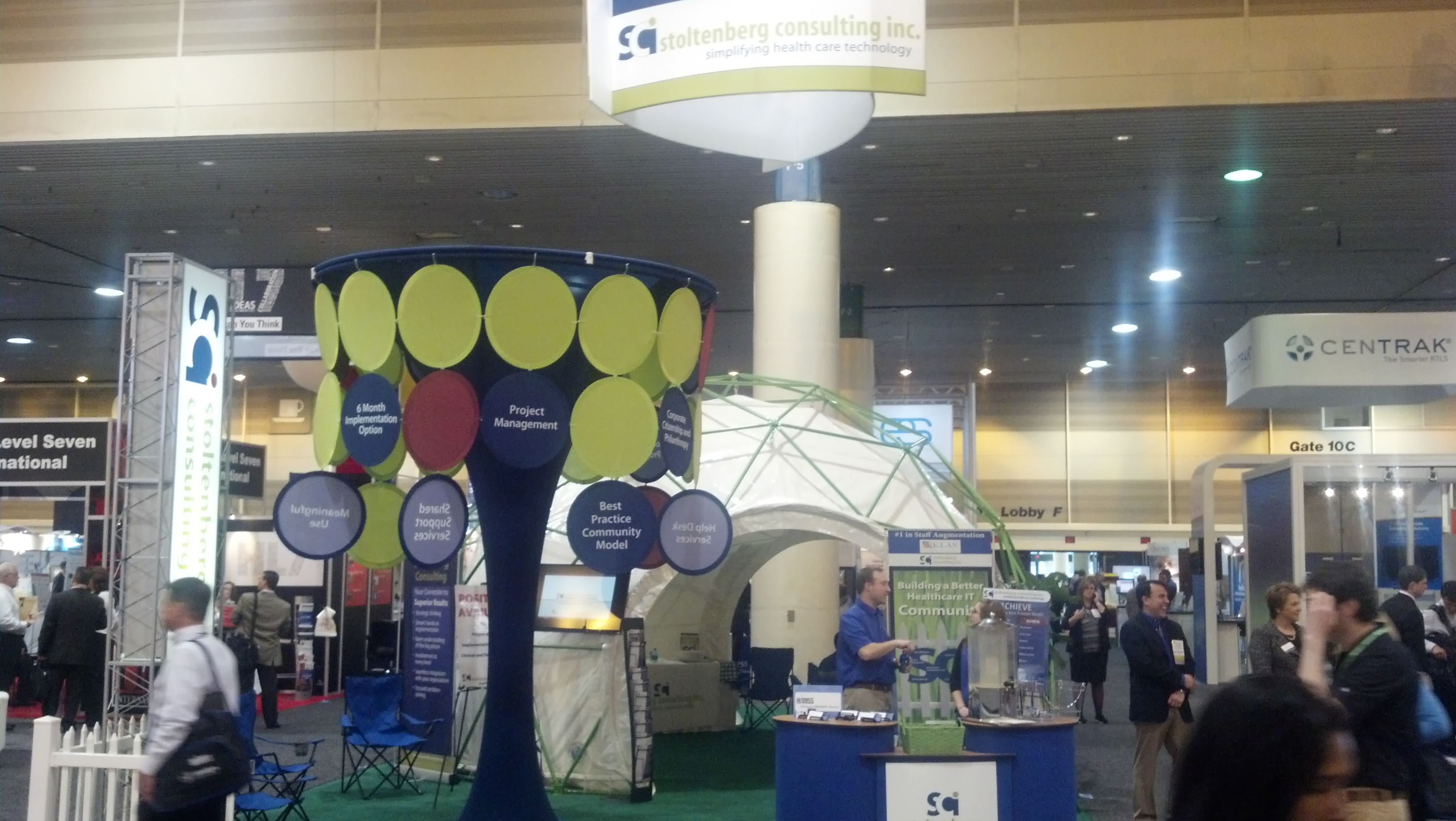
I thought I would share my experience at HIMSS13 with you all. But then I was thinking about conferences in general and thought I wanted to write about that instead. Having just spent 5 days in New Orleans attending this year’s HIMSS conference, I have a new found respect for booth work and networking.
I’ll start with my comments around booth work. I probably spent about 12 hours actually working the booth over the last several days. The vast majority of visitors were other vendors eager to partner. I found only one interesting enough to be a potential. However, I collected some 20+ business cards myself from CIOs, Project Directors, and other implementation leads from various hospitals. All eager to hear more about our service offerings, that was obviously invaluable. Then I collected another 8 business cards and a resume from folks looking to get into consulting. Given that the networking and exchange of information I was able to do in 12 hours, I can only assume the others working the booth (there were 5 others) also had the same experiences. If so, we are talking about a potential of 100 or more possible client contacts and 30 or so possible candidates. How can you put a value on that?
Epic had the biggest booth by far. There theme was a warm log cabin with a theatre and digital life size fireplace and all. They sent almost 200 employees to the event. Interestingly, this past year Epic felt they no longer needed to invite consultant firms to offer booths are UGM. A fear of heavy recruiting, voiced by CIOs, no doubt was the primary reasoning. However, I did find the fact that they dominated the floor of a mile long show room a bit hypocritical. Surely they also see the value in offering a booth at such large Healthcare IT conferences. We all have signed the non-recruit agreements in the past, so one can only hope to see this change in the future.
Networking with potential and current clients is another true value to attending these types of shows. I met so many people my head is still spinning. It’s amazing to see how small our world is as I talk with CIOs and other leaders from hospitals I have worked at or with in the past. One of my favorite gatherings was with a CIO from the Seattle area. Our sales guy from that area had just met her. She agreed to join us for drinks and then later joined us at the official Mardi Gras party. Even if we don’t get future business from this specific client, creating relationships will certainly carry through word of mouth.
I also was fortunate enough to network and talk with several folks from my previous employer, including my former boss. It was great to just see the support from so many people, even though I now work for a competitor (all be it, an insect in comparison). I was even able to coordinate a dinner with some old colleagues, which I found extremely beneficial.
The event this year had several key note speakers. Bill Clinton was by far the most attended event of any HIMSS in history. Although I found his speech to be less then organized (a collection of random statements), just his very presence in the same room was enough for me. I attended several CHIME events, including an awesome CIO forum meeting. Getting to hear their thoughts on marketing, sales, and creating new business was worth the trip alone.
So if you are invited to attend a conference to work a booth, and hesitate…I hope you’ll reconsider. I will eagerly participate in events were the “value” can so easily be identified. Are there events with no opportunity on return on investment? Obviously the answer is yes. But HIMSS, UGM, CHIME, and several others are well worth the price of travel and admission.
1. How would you describe work “cultures” you’ve experienced throughout your career?
I was recently asked to submit some thoughts on work culture from my old boss. I thought this was worth sharing.
“Culture” has always been a part of the appeal for working at any company as long as I can remember. My very first job was as a bus boy for a local pub called the Euclid Hotel. It was owned by our neighbor and all the employees were his sisters, brothers, cousins, close friends or other neighbors. I worked there for years and finally left when I moved to Boston after college.
Finding another family owned company was impossible in downtown Boston, but I did find a substitute on the Odyssey. This fine dining dinner cruise ship was privately owned and had three boats in the US; Boston, Chicago, and Washington D.C. The employees were treated like family. One summer we had a hepatitis outbreak and we were all quarantined for 30 days. The owners rented a 8 bedroom house on Martha Vineyard and offered for any employee to stay there for the month. They kept the fridge full and taps flowing while still paying us for every lunch and every dinner cruise we were scheduled to work that month. The gesture of taking care of your employees was phenomenal and hard pressed to be found elsewhere.
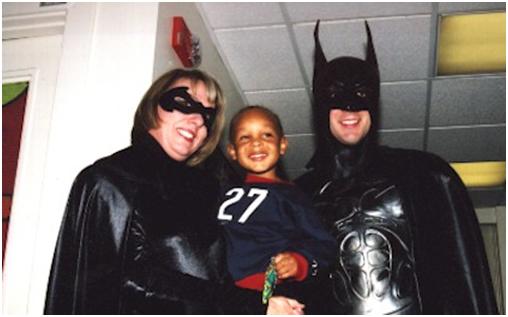
After leaving the hospitality industry to go into Healthcare IT, I searched far and wide for a similar feel…and ended up finding it at Children’s Hospital Boston. While the family culture was gone, it was replaced with a community culture and sense of pride. Association of working for the #1 Pediatric Hospital in the country (at the time) was something that drove loyalty and commitment from employees. Knowing what you did and how it impacted the families and patients, kept us motivated. Every Halloween I was a part of a team that dressed up and visited the kids on our inpatient and Ambulatory floors. The year I was chosen to be Batman and walked into an inpatient room where the kid was playing with his Batman toys while watching a Batman cartoon on tv will be one of the most powerful memories of working for CHB. The father and mother were tearful with gratitude and sent a thank you letter to me a few weeks later after their son had passed away. Even now I’m emotional remembering the impact we had on that family that day.
It’s now that I realize, culture isn’t just about how you are treated, but what you give back and contribute as well. maxIT has given me so much over the 5 years I spent with them…and I’ve been so fortunate to be able to contribute to that culture in New Employee Orientation every month. I still receive thank you notes to this day about what an impact NEO had on their initial impressions of maxIT. Clearly maxIT was invested in on-boarding and identifying that culture on the first day of each employee. Thank you for adding yet another wonderful experience to my career.
I can only hope that my newest employer will give me an opportunity to be a part of such a fantastic culture. I already know the culture is there, I need to get involved, volunteer…and become a part of it all first.
Perceptions and Realities of Changing Jobs

I have many friends who have been with the same company for twenty-five or more years. For younger generations, it seems to be an ‘old school’ mentality to make a lifelong commitment to a single organization. I used to think those who did so were complacent. I certainly have a new found respect to the commitments and loyalties of these few. I myself have worked for 10 different companies in the last twenty years. Having just recently departed from my last company, I got to thinking…why can’t I stay anywhere for longer than 5 years? How are people perceiving my work ethic if I change jobs again? Without going into the specifics of why I made the job change, I would rather focus on the perceptions and realities of actually making the change.
Recruiting
I first started looking at options to make a change 7 months ago. Once I had decided to look, the phone never stopped ringing with opportunities. One might think, “wow…lucky me, so many options!” Well the reality of it was 95% were not a fit. In fact many of them were opportunities I was not qualified for or would not be interested in. As consultants, whether in leadership or providing client direct support, there is a huge demand. Recruiters will do anything to convince you they have the perfect fit for you. The grass is greener at every turn, and the potential is bigger than the next guy can offer you.
Perception – Recruiters will help align my skill set and experience with an opportunity that fits my professional and personal goals.
Reality – Some (and let me make that clear, some) recruiters are not interested in your goals, cultural fit, qualifications, or ability to be successful at the opportunity they have. They just need people.
Interviewing
My experience made one thing clear. You own the decision to be submitted for an opportunity. No recruiter or manager can own that. Research the company. Research the opportunity. Use your contacts to find out everything you can. Interview everyone you can. Ask for the opportunity for an in person interview.
Perception – If you submit your resume and accept an interview, you are interested.
Reality – Interviewing is the best way to determine if you are interested in the role. You are interviewing them just as much as they are interviewing you. I spent 15 hours interviewing just one firm.
Compensation Discussion
No one is comfortable with discussing compensation. It’s awkward at best and everyone is skeptical of what you say you are making versus what you are actually making. In the world of consulting we have packages that include base salary, bonus incentives based on deliverables or hours billed, benefits, equity (sometimes), and work life balance (yes folks, this is part of your compensation). If you can be a part of creating the compensation package with your thoughts on each of these areas…you are on the right path to creating a job you’ll be invested in. It’s not just about the money, it has to be about the job.
Perception – You will make more money.
Reality – No one can tell you what you ‘will’ make in this industry. They can tell you what you potentially ‘could’ make. With variations of client needs, hourly rates, priorities of deliverables, market trends, competition, acquisitions, and other unknowns…seek a base salary that meets your requirements. View all bonuses and equity as enhanced focused job description bullets that might be awarded.
Giving Notice
Of the 10 jobs I’ve had in the last 20 years, I’ve loved them all. I’ve never found giving notice an easy thing to do. Whether I was moving on for something bigger, moving away, or needed a change…I could never figure out the right thing to say. In this most recent departure, good bye and thank you was necessary…but reasoning for departure was my discretion. The bigger question was not “how to give notice,” but “when to give notice. Be prepared for anything, including wrapping up that day.
Perception – I can give two weeks’ notice and they will accept resignation and agree to my last day.
Reality – Your perception of your worth and value to the company by staying on for another 2 – 4 weeks may not be in alignment with your boss. In my case, we worked out a decision that was beneficial for everyone. I was lucky. In this industry, your resignation letter is often times welcomed to be effective that day.
This has been the hardest decision of my professional career. I’m super excited about the new opportunity in front of me, and thankful the long path of being slapped in the face with reality is over. Changing jobs is not fun folks. I hope all of you have found a place that you can one day say, “I’ve been here for 25 years!” I think I have…
Lessons learned from recent flights
 Thought I would share some fun little facts I learned on recent flights from Boston to Barcelona and another flight from Boston to Seattle.
1) You can get upgraded internationally even if you used points to book on Delta. We were upgraded to first class on our flight from JFK to Barcelona despite all my inquiries and being told I was not eligible. I paid 220,000 points for two coach seats. It was another 230,000 points to upgrade to first class. We ended up getting the upgrade for free. So you never know.
2) TSA Pre-check will not work for international flights. I thought I would be ok for my flight from Boston to JFK. No go. I did apply for international Clear, but I’m still in the process.
3) Your position on the upgrade list when flying a “partner” airline is usually all the way on the bottom. Despite my status with Delta, I flew Alaska air from Boston to Seattle and was #19 out of 19 on the upgrade list. I inquired with the gate agent, as I found it unlikely that all these people had flown over 120,000 miles thus far this year. I was told Alaska members are listed first, then partner airline members second. I did get 2500 MQM points for the trip, but no upgrade either way.
4) TSA pre-check only works for your primary airline. Another disappointing discovery. I received pre-check from Delta…and evidently it is only good when flying Delta domestically.
5) Finally, when returning from an international flight at JFK, you have to go through security again. We never went outside the terminal. You pick up your luggage, go through customs and then drop off your luggage on the other side for your connecting flight. The tricky thing was another security station right there. We had bought duty free on the flight home, so we had bottles of vodka in our backpack. No one mentioned we had to go through security again. Fortunately our bags had not gone down the belt yet, so we were able to put the bottles in our checked luggage and return to the security line. And oh, no pre-check here or first class lines for that matter.
Click on my image below for my Professional Profile

 consultant-tips.blog
Comments